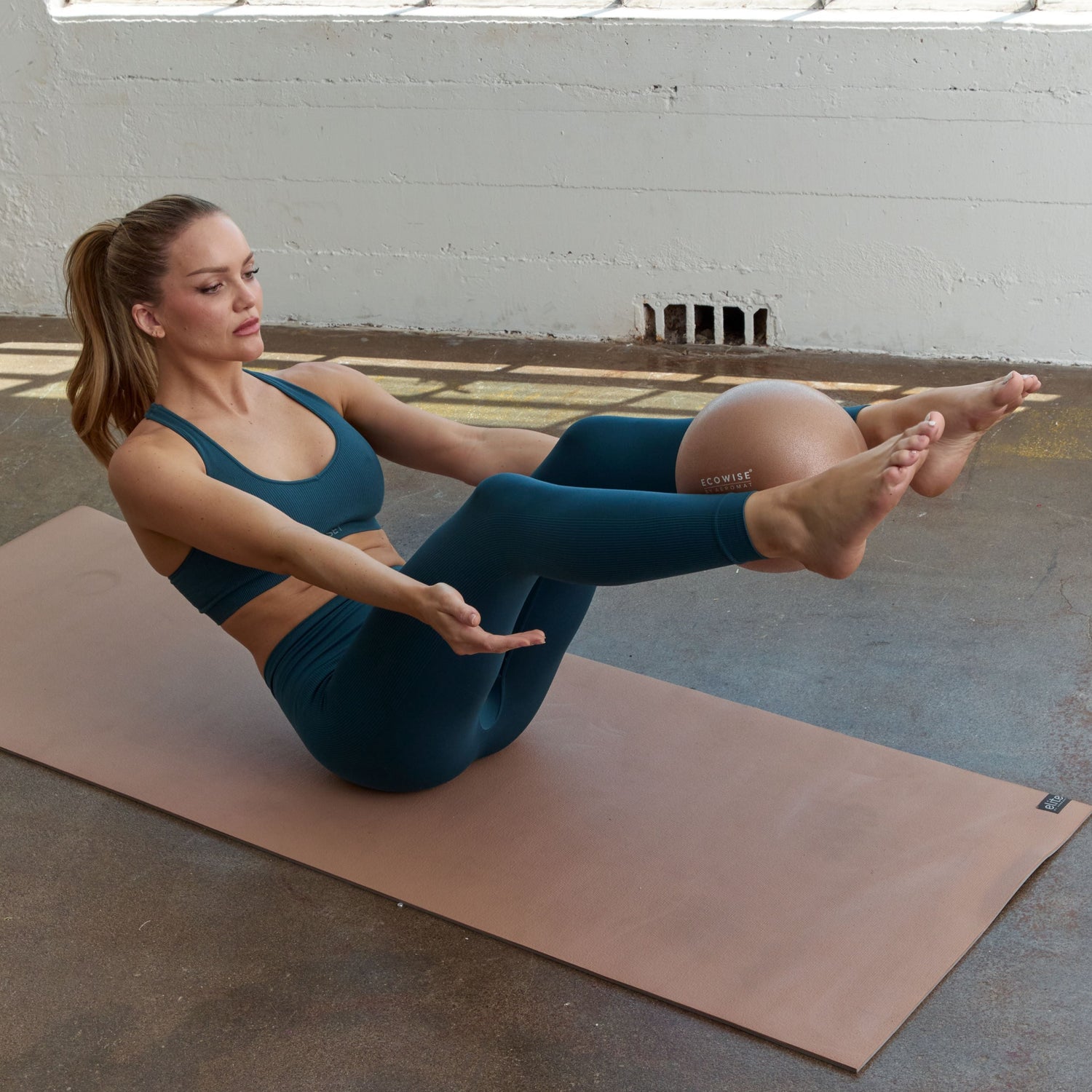

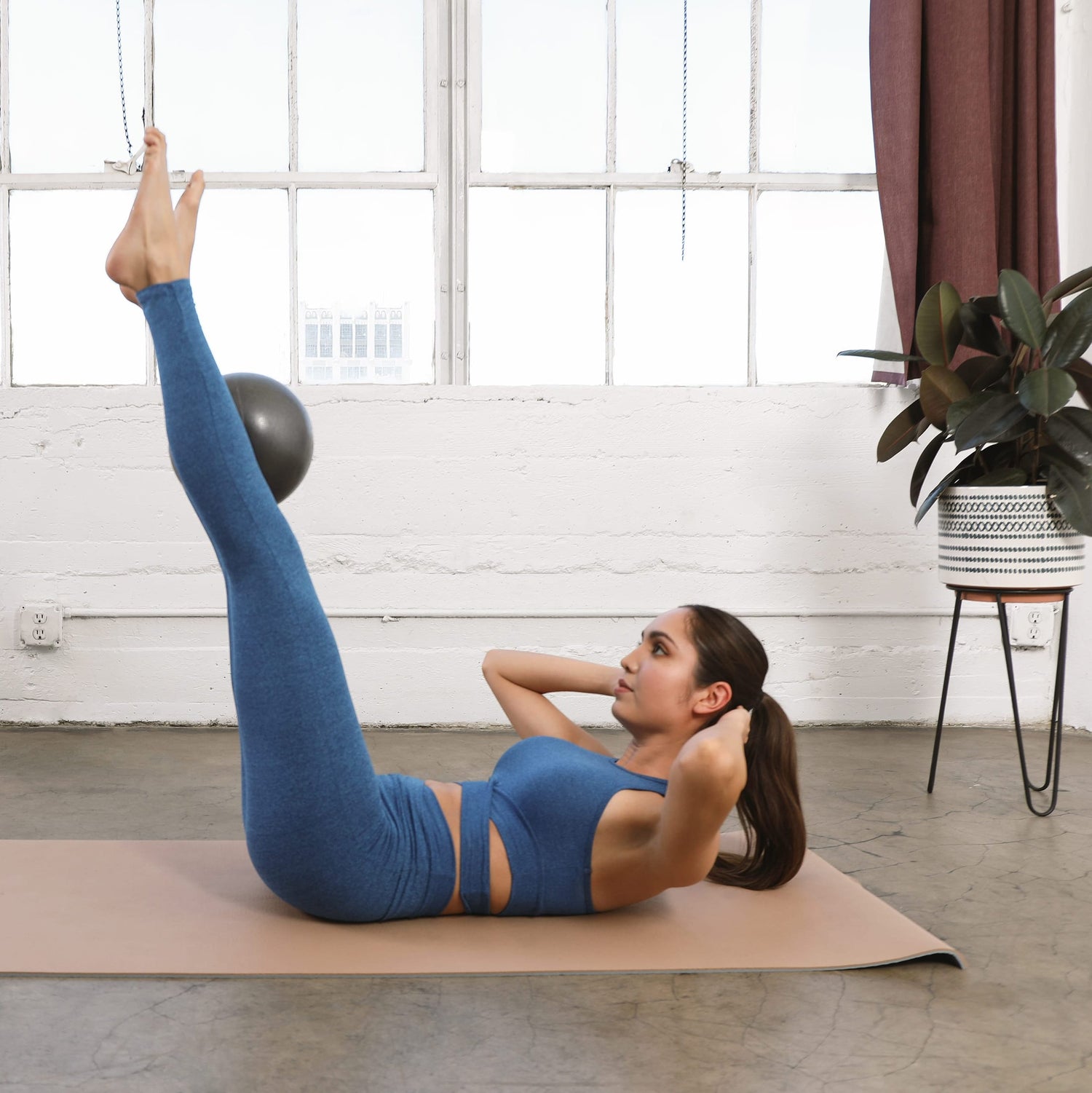

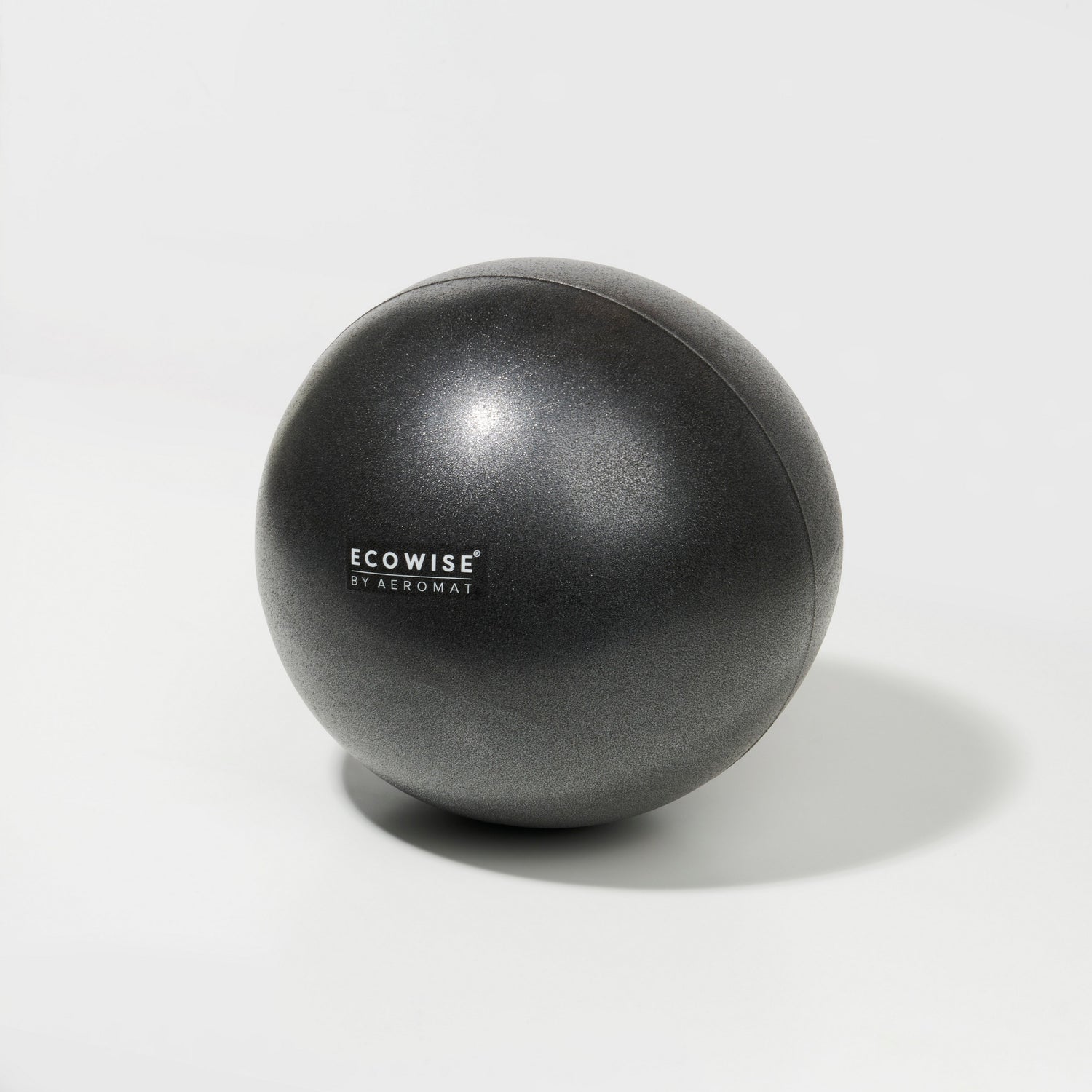

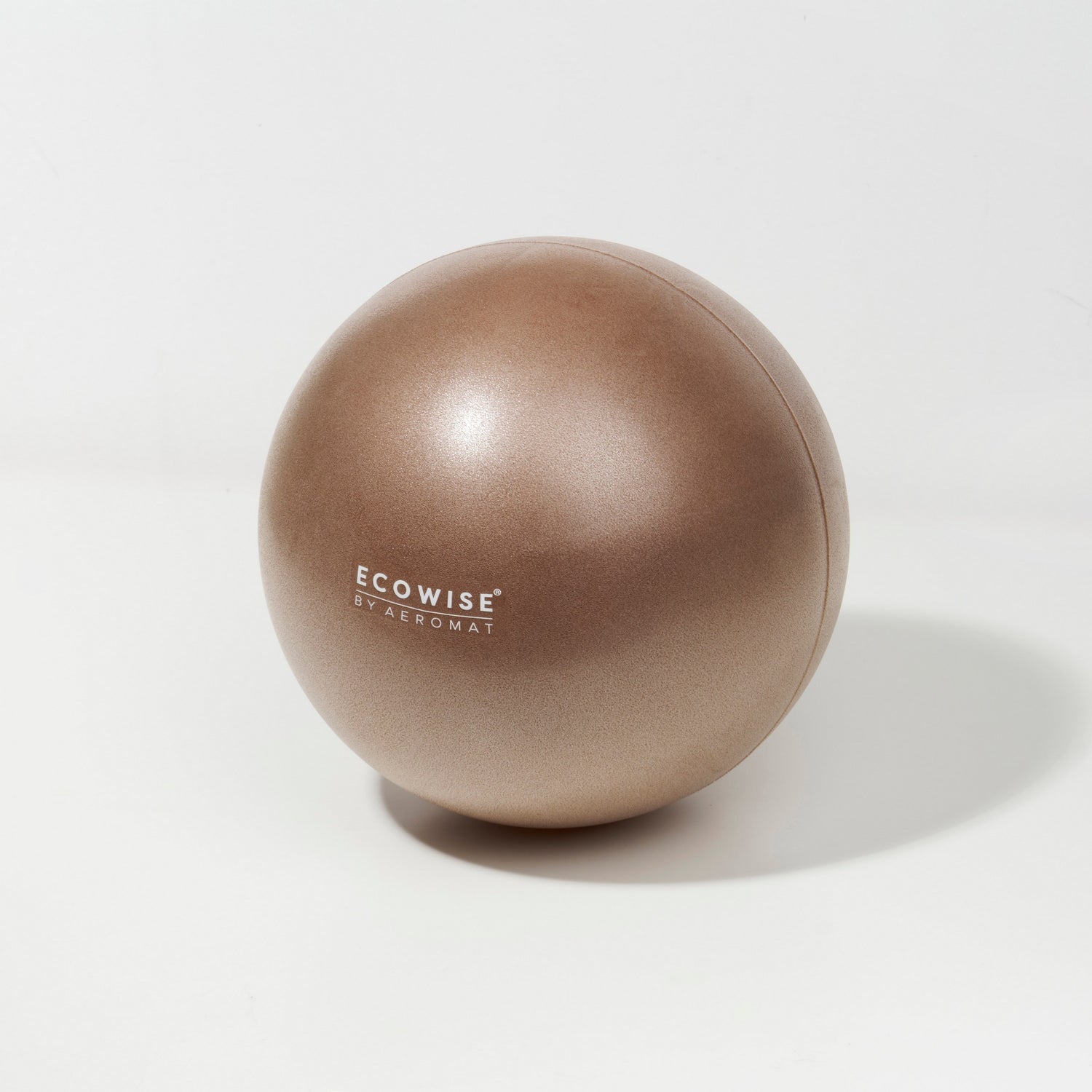


A strong core supports far more than your workouts. It plays a role in balance, posture, stability, and many of the movements you perform throughout the day. If you want a simple way to make core training more challenging without relying on complicated equipment, a medicine ball can be an easy place to start.
These beginner-friendly medicine ball exercises for abs use straightforward movements that are easy to learn and adapt to your fitness level. In this guide, you’ll find five ab exercises using medicine ball resistance, along with step-by-step instructions, form tips, and beginner modifications to help you build confidence and control as you train.
Why Use a Medicine Ball for Ab Exercises?
Your core helps stabilize your body during everyday movements, exercise, and recreational activities. Adding a medicine ball gives your muscles an external load to control, creating another way to practice core stability and strength.
Medicine balls are also particularly versatile. Depending on their design, they can be held close to the body, extended away from you, moved from side to side, or incorporated into standing and floor exercises.
For beginners, the goal is not to select the heaviest ball available. A lighter medicine ball that lets you maintain steady, controlled form is usually the better place to start. Aeromat's beginner medicine ball guidance recommends starting around 4–8 pounds and gradually increasing weight as strength and technique improve.
Before starting your workout:
-
Choose a weight you can comfortably control through the entire movement.
-
Give yourself enough open space to exercise safely.
-
Use a supportive exercise mat for floor-based movements if desired.
-
Move slowly instead of relying on momentum.
-
Stop if an exercise causes sharp pain or unusual discomfort.
-
If you have an injury, medical condition, or are returning to exercise after rehabilitation, consider asking a qualified healthcare or fitness professional which movements are appropriate for you.
Once you are comfortable with your setup, try these five beginner-friendly medicine ball exercises for abs.
1. Seated Medicine Ball Rotation
The seated rotation is a beginner variation of the traditional Russian twist. Keeping your feet on the floor makes the exercise easier to control while you learn how to rotate your upper body without rushing through the movement.

How to Do a Seated Medicine Ball Rotation
-
Sit on an exercise mat with your knees bent and feet flat on the floor.
-
Hold the medicine ball with both hands in front of your chest.
-
Sit tall and gently engage your abdominal muscles.
-
Keeping the ball close to your torso, slowly rotate your chest toward your right side.
-
Return to the center.
-
Rotate toward your left side.
-
Continue alternating sides at a steady, controlled pace.
Beginner goal: Start with 6–10 rotations per side.
Form Tips
-
Keep both feet firmly planted on the floor.
-
Think about rotating through your torso rather than simply moving your arms from side to side.
-
Keep your shoulders relaxed and your chest lifted.
-
Use a smaller range of motion if you have difficulty maintaining an upright posture.
-
Avoid moving quickly just to complete more repetitions.
Make It Easier
Hold the ball directly against your chest rather than extending your arms. Keeping the resistance closer to your body reduces the leverage you have to control.
Once your technique improves, you can gradually move the ball slightly farther from your chest.
2. Medicine Ball Dead Bug Hold
The dead bug is an excellent exercise for practicing core control while your arms and legs move. Adding a medicine ball gives you an easy way to create gentle resistance without requiring a large range of motion.

How to Do a Medicine Ball Dead Bug Hold
-
Lie on your back with your knees bent.
-
Lift your feet until your knees are positioned approximately above your hips.
-
Hold a light medicine ball above your chest with both hands.
-
Gently brace your core while keeping your back in a comfortable, stable position against the mat.
-
Slowly lower your right heel toward the floor.
-
Bring your right leg back to the starting position.
-
Repeat with your left leg.
-
Continue alternating legs while keeping the medicine ball steady above your chest.
Beginner goal: Perform 6–8 repetitions per leg.
Form Tips
-
Move one leg at a time.
-
Keep the ball stable instead of allowing it to drift toward your head.
-
Focus on smooth, controlled breathing.
-
Only lower your heel as far as you can while keeping your torso stable.
-
Avoid arching your lower back excessively as your leg moves away from you.
Make It Easier
Instead of beginning with both legs elevated, keep one foot planted on the floor while moving the opposite leg.
You can also practice simply holding the medicine ball above your chest for 15–20 seconds while maintaining gentle abdominal tension before adding the leg movement.
3. Medicine Ball Crunch
A medicine ball crunch adds light resistance to one of the most familiar beginner abdominal exercises. The key is keeping the ball close to your chest initially rather than turning the movement into an overhead lift.

How to Do a Medicine Ball Crunch
-
Lie on your back with your knees bent and your feet flat on the floor.
-
Hold a light medicine ball against your chest with both hands.
-
Keep your elbows relaxed.
-
Gently brace your abdominal muscles.
-
Slowly lift your head, shoulders, and upper back slightly away from the mat.
-
Pause briefly at the top.
-
Lower yourself back down with control.
-
Repeat without using momentum.
Beginner goal: Start with 8–12 repetitions.
Form Tips
-
Think about bringing your ribs slightly toward your hips rather than pulling your head forward.
-
Keep your neck relaxed.
-
Do not use the medicine ball to create momentum.
-
Maintain a steady tempo on the way up and down.
-
Stop the lift once your shoulder blades begin coming away from the floor; a crunch does not need to become a full sit-up.
Make It Easier
Perform a few bodyweight crunches before adding the medicine ball.
You can also use a very light ball or simply rest the ball against your torso rather than actively pressing it into your chest.
4. Standing Medicine Ball Side Bend
Not every core exercise needs to happen on the floor. Standing side bends introduce lateral movement and are an approachable option for beginners who want to include standing ab exercises using medicine ball resistance.

How to Do a Standing Medicine Ball Side Bend
-
Stand with your feet about hip- to shoulder-width apart.
-
Hold a light medicine ball against your chest with both hands.
-
Stand tall with your shoulders relaxed.
-
Gently tighten your abdominal muscles.
-
Slowly bend your torso toward your right side without leaning forward.
-
Return to the starting position.
-
Slowly bend toward your left side.
-
Continue alternating sides.
Beginner goal: Perform 8–10 repetitions per side.
Form Tips
-
Keep your hips relatively still.
-
Imagine moving your rib cage toward the side of your hip.
-
Avoid twisting your torso during the side bend.
-
Keep the movement slow and relatively small.
-
Maintain even pressure through both feet.
Make It Easier
Use a smaller range of motion and hold the ball close to your chest.
As your control improves, you can experiment with holding the ball slightly farther away from your body. Avoid progressing until you can perform the basic variation comfortably and without relying on momentum.
5. Medicine Ball Knee-to-Ball March
The knee-to-ball march is a simple standing exercise that combines core engagement with balance and coordination. It can also provide an approachable alternative for people who do not want an entire ab workout performed on the floor.

How to Do a Medicine Ball Knee-to-Ball March
-
Stand tall with your feet about hip-width apart.
-
Hold the medicine ball in front of your chest with both hands.
-
Tighten your core gently and keep your shoulders relaxed.
-
Lift your right knee toward the medicine ball.
-
At the same time, bring the medicine ball slightly downward toward your knee.
-
Return your right foot to the floor and bring the ball back to chest height.
-
Repeat with your left knee.
-
Continue alternating sides at a controlled pace.
Beginner goal: Perform 8–12 repetitions per side.
Form Tips
-
Avoid hunching your shoulders toward your knee.
-
Keep your standing leg slightly soft rather than locking the knee.
-
Think about lifting the knee using control rather than swinging the leg upward.
-
Move slowly enough to maintain your balance.
-
Keep the ball close to your body when first learning the exercise.
Make It Easier
Perform the exercise next to a wall or another stable surface and use one hand for balance while holding a light medicine ball in the other hand.
You can also reduce how high you lift your knee. A smaller controlled motion is more useful than a larger movement that causes you to lose your balance.
Choosing the Right Medicine Ball for Beginner Core Workouts
Medicine balls come in several designs, so the best choice depends on the exercises you plan to perform.
For basic beginner floor exercises, a traditional round medicine ball offers a simple option. Handle-equipped designs may be useful when you want additional gripping positions for rotational or functional movements.
Aeromat/EcoWise currently offers several medicine ball styles within its weight-training collection, including traditional, dual-grip, rope, and kettlebell-style options.
Options include:
-
Aeromat Dual Grip Power Medicine Ball: Features two built-in grips designed to increase versatility during abdominal training, rotational exercises, and other strength movements. The current range includes multiple resistance levels from 6 to 30 pounds.
-
Aeromat Elite Power Rope Medicine Ball: Combines a traditional medicine ball with a rope to support rotational and multiplanar core exercises.
-
Aeromat Deluxe Medicine Ball: A balanced traditional medicine ball intended for upper-body and core strength training, with weights currently ranging from 4 to 30 pounds.
-
Aeromat Extreme Elite Medicine Ball: Provides resistance for static and dynamic exercises and comes in multiple weights for different training levels. It is not designed for slamming.
-
Aeromat Elite Kettlebell Medicine Ball: Combines a wide handle and flat-bottom design with a synthetic rubber construction, providing another option for rotational exercises, squats, and other functional movements.
Always check the intended use of your specific medicine ball before performing slams, throws, bouncing exercises, or other high-impact movements. Several Aeromat medicine ball models are specifically identified as not intended for slamming.
Supporting Everyday Movement With Aeromat/EcoWise
At Aeromat/EcoWise, we believe fitness and wellness equipment should fit into real life. Our products are designed to support everyday movement and wellness across a variety of environments, whether you are creating opportunities for movement in a classroom, encouraging more activity at work, supporting exercises in a rehabilitation clinic, equipping a fitness studio, or building a practical workout space at home.
Our fitness range extends well beyond medicine balls. Aeromat/EcoWise offers equipment for strength, core training, balance, active sitting, mats, recovery, and functional fitness, giving individuals and organizations options for many different spaces and training goals. The current collection of weights includes medicine balls, kettlebell-style medicine balls, dual-grip models, rope-equipped balls, and additional weighted training tools.
Whether you are just learning medicine ball exercises for abs, expanding a studio's equipment selection, or looking for versatile fitness tools that can support different users and activities, choosing equipment that suits both the movement and the environment can make it easier to build consistent activity into the day.

Ready to Strengthen Your Core? Explore Aeromat/EcoWise Fitness Equipment
You do not need an advanced workout routine to start strengthening your core with a medicine ball. The most effective place to begin is with manageable resistance, simple movements, and enough time to learn how each exercise should feel.
Seated rotations, dead bugs, crunches, standing side bends, and knee-to-ball marches provide five approachable ab exercises using medicine ball resistance that beginners can practice individually or combine into a short core workout. As your strength and coordination improve, you can gradually add repetitions, additional sets, or more resistance.
Ready to build your workout space? Explore the Aeromat/EcoWise collection of fitness equipment and weights to discover medicine balls, weighted training equipment, mats, balance products, recovery tools, and other versatile options designed to support movement at home, at work, in fitness facilities, rehabilitation environments, classrooms, and beyond.
FAQs
Are medicine ball exercises good for abs?
Yes. Medicine ball exercises for abs add resistance to core movements, which can make your abdominal muscles work harder to stabilize and control your body. They are also versatile enough for beginners because you can adjust the weight, range of motion, and number of repetitions.
What medicine ball weight should a beginner use for ab exercises?
Many beginners do well starting with a light medicine ball that they can control comfortably throughout each exercise. The best weight is one that allows you to maintain proper form without straining, swinging the ball, or relying on momentum.
How often should beginners do medicine ball exercises for abs?
Beginners can typically include ab exercises using medicine ball resistance two to three times per week, depending on their overall workout routine and recovery needs. Giving your core adequate rest between sessions can help you maintain good form and avoid overtraining.
How long should a beginner medicine ball ab workout last?
A beginner workout does not need to be long to be useful. Around 10 to 20 minutes can be enough to complete several ab exercises using medicine ball resistance while allowing time to move slowly, rest between exercises, and focus on proper technique.